
10 Advantages of Google My Business for Local Companies
Google My Business:
Did you know Google is more than just a search engine? It is also a directory...


Anxiety is spreading through the marketing world: Is AI making traditional SEO obsolete? With AI delivering instant answers and more than half of Google searches now ending without a click, it’s easy to see why many believe the game is over. But this perspective misses the bigger picture.
The truth is that search isn't dying, it's fracturing. The human behavior of seeking information hasn't disappeared; it has simply spread across a more diverse set of channels. Consumers are now looking for solutions everywhere, from Google’s AI Overviews and ChatGPT to community forums like Reddit. This isn't an extinction event; it's a shift.
The recurring narrative that "SEO is dead" is a fundamental misconception. To understand why, we must recognize that search is a behavior, not a single platform. Whether people are typing a query into Google, prompting an AI like ChatGPT, or asking a question on a Reddit forum, they are engaging in the act of search.
What has changed is where this behavior takes place, and more importantly, why. Consumers aren't abandoning Google for lack of quality content; they’re escaping SERP friction for clean interface design and faster answers. This shift, driven by a demand for a better experience, has distributed the journey to discovery across an ecosystem that includes traditional search engines, AI engines, and community forums. Viewing this as a "fracturing" is far more empowering for marketers. It reframes the challenge from defending a single channel to building a unified authority strategy that is visible wherever your audience asks questions.
For years, backlinks were the gold standard of SEO authority. This is no longer the operational reality. The new currency of authority is brand mentions, because while Google counts links, AI engines count conversations.
AI models read context to determine credibility, making who is talking about you far more important than who is linking to you. This shifts the strategic focus from technical link building to building a voice and earning a place in the broader conversation. To build the kind of authority that AI engines recognize, you must prioritize tactics that generate credible citations, such as securing expert quotes in trade publications, publishing first-party research that gets cited, and activating trusted creators who can validate your brand to their communities.
A brand mention is like the new backlink in the age of AI search. While Google counts links, AI counts conversations, shifting the game from link building to voice building.
Here is a shift that every content creator must internalize: LLMs don't read your articles. They index and retrieve information in discrete, paragraph-sized pieces called "chunks." This process has profound implications for how we must structure content. The practical takeaway is that every paragraph must function as a complete, self-contained thought, one that is understandable on its own, without relying on surrounding context. This modular structure is how you create content that is primed to be surfaced in AI summaries, thereby earning the brand mentions discussed in the previous rule.
To make your content optimally machine-readable, structure your sentences using semantic triples (Subject-Predicate-Object). This technique clearly identifies and connects entities, helping AI engines understand information in context. For example, instead of a vague sentence, a semantic triple is direct and clear:
This isn’t just a writing tweak; it’s a requirement for ensuring your expertise can be accurately identified, retrieved, and credited by AI.
Not all keywords are created equal in the era of AI Overviews. A strategically vital concept is the emergence of "AI-immune" keywords, queries that are highly unlikely to trigger a generative AI answer. These are typically service-based or local keywords, such as "plumber Toronto." When a user searches for this, they intend to hire a provider, not get information. Search engines understand this and will continue to return local packs, ads, and traditional blue links.

In contrast, broad informational queries like "how does SEO work" are highly likely to be answered by an AI Overview, resulting in a zero-click search. The strategic implication is clear: you must audit your keyword portfolio to identify which terms still offer direct SEO opportunities. Focusing on AI-immune keywords is a crucial portfolio management strategy for de-risking your organic channel against AI disruption.
The fear that Google will penalize AI-generated content distracts from the real issue. The platform of origin is far less important than the quality and originality of the final output. The true test is not whether AI assisted in the content's creation, but whether the content itself deserves to rank by providing unique "information gain."
This reframes the entire debate. Your focus must shift from a defensive posture of avoiding penalties to an offensive strategy of creating superior content, regardless of the tools used. To create content that deserves to rank, implement this operational framework:
While the tactics of search are undergoing a seismic shift, the foundational principles are becoming more important than ever. The fragmentation of search and the rise of AI all point to one enduring truth: visibility is earned through credibility. Building Experience, Authority, and Trust is no longer just good practice; it is the core strategy for success.
The companies that thrive will be those that prove their expertise through proprietary research (Experience), amplify their credibility with expert mentions (Authority), and maintain a consistent, reliable presence across all channels (Trust). As you adapt your strategy, the ultimate question is no longer how to game an algorithm, but whether you are building a brand that genuinely deserves to be recommended.

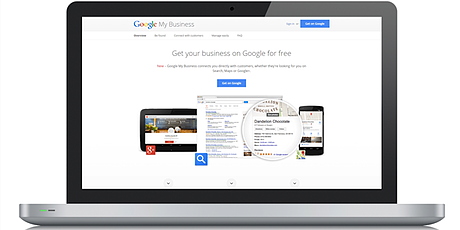
Google My Business:
Did you know Google is more than just a search engine? It is also a directory...

Digital marketing campaigns are a powerful tool offering incredible insights into customer...
Leave a Comment