
The Power of Event Marketing: Connecting and Engaging
Event marketing is an essential strategy for businesses looking to generate leads, boost brand...


A successful event isn't just about filling a room. It's about creating meaningful connections, generating qualified opportunities, and turning event engagement into measurable business growth.
Organizing a great event is only half the battle. The real challenge is getting the right people to attend, and turning their attendance into business results.
You can have outstanding speakers, a carefully planned agenda, and the perfect venue, but without an effective promotional strategy, even the best event can fall short. Empty seats represent more than missed attendance; they can mean missed opportunities for relationships, sales, and long-term customer growth.
Event marketing needs to move beyond simply posting on social media or sending a few promotional emails. The most effective approach is a strategic, multi-channel system that attracts the right audience, builds anticipation, delivers value, and creates measurable business outcomes.
Whether you're hosting a conference, trade show, workshop, customer appreciation event, or industry open house, the goal is the same: make your event a business growth opportunity before, during, and long after the event itself.
Move away from vanity metrics and focus on measurable business impact. Understand how event investments contribute to revenue, sales opportunities, and customer relationships.
Instead of focusing only on how many people attended, consider the following key performance indicators (KPIs):
When events are measured against these outcomes, they become more than marketing expenses. They become strategic investments that can be evaluated, improved, and connected to the broader business plan.
A successful event promotion campaign rarely depends on a single marketing channel. It requires a coordinated approach in which different channels work together to build awareness, drive registration, and maintain momentum.
The most effective event marketing strategies combine owned media, paid advertising, strategic partnerships, and community engagement.
Start with the marketing assets and communication channels your organization controls.
Rather than sending the same message to your entire database, divide your audience into relevant segments based on customer type, buyer journey stage, previous engagement, and interests.
Use targeted emails to move prospects through the registration process:
Personalized messaging helps recipients understand why the event matters to them and what they can expect to gain by attending.
Create a dedicated event landing page or website that serves as the central source of information.
Include:
Your event website should make it easy for potential attendees to move from interest to registration with as little friction as possible.
Use blog posts, industry insights, guides, and educational resources to build interest around the event's core topics.
Content marketing can help attract organic search traffic, answer potential attendees' questions, and establish the event as a valuable resource within its industry.
Paid advertising can expand reach and re-engage people who have already shown interest.
Consider using:
The key is to connect ad messaging to the audience's needs rather than relying on generic event promotion.
Your event doesn't have to be promoted by your organization alone.
Industry partners, speakers, sponsors, and community organizations can help introduce the event to new audiences while building credibility.
Potential partnership strategies include:
These partnerships can extend the reach of your campaign and create mutual value for everyone involved.
Getting someone to register for an event often requires more than simply explaining what will happen. Potential attendees need to understand the value of investing their time and money.
Two strategies can help: demonstrating value in advance and creating a clear reason to act now.
A free workshop or preview event allows prospects to experience the quality of your content before committing to a larger event.
This approach can help reduce uncertainty and build trust by demonstrating value rather than relying exclusively on promotional promises.
To make this strategy effective:
The objective is to create a positive experience that helps potential attendees make an informed decision about participating.
For paid events, structured incentives can encourage early commitment.
Early-bird pricing with clearly defined deadlines can help generate initial registrations, establish campaign momentum, and provide an early indication of audience demand.
Referral programs can also turn existing attendees into advocates. Consider offering incentives to both the person making a referral and the new attendee they introduce, where appropriate.
These strategies work best when the value of the event is clear and the incentive supports, rather than replaces, that value.
In an increasingly digital marketing environment, physical promotion remains an important opportunity, particularly for local events, trade shows, and business-to-business campaigns.
Postcards, flyers, and printed invitations can attract attention, but measuring their direct contribution to registrations can be difficult.
One practical solution is to connect physical marketing to digital tracking.
Place unique QR codes on printed materials that lead directly to your event registration page or event information hub.
QR codes can help:
For example, a postcard distributed at a trade show could use a dedicated QR code that leads to a landing page designed specifically for that audience.
This creates a clearer connection between physical promotion and digital results, helping marketers better understand which channels contribute to registration.
An event should not be viewed as a one-time marketing activity that ends when the doors close.
It can become a valuable source of content that supports your marketing efforts for weeks or months afterward.
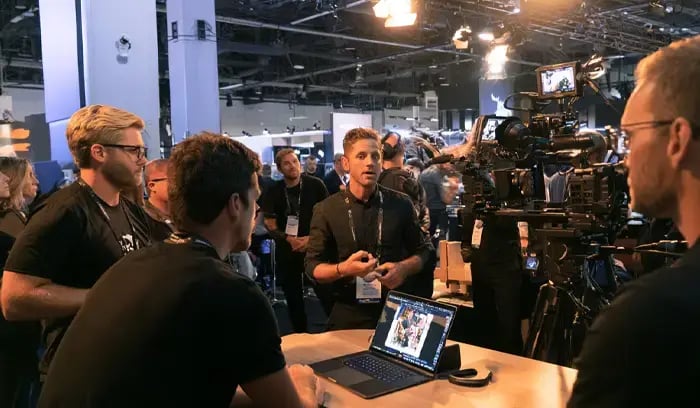
Conferences, trade shows, and workshops bring together customers, speakers, partners, employees, and industry experts in one environment. That creates opportunities to capture authentic conversations, insights, and experiences that would be difficult to replicate in a traditional content production setting.
Consider capturing:
The goal is to build a content ecosystem rather than produce a single event recap.
For example, one customer interview could become a short social video, a longer video testimonial, a blog feature, and content shared by the customer or partner themselves.
Your event becomes both a live experience and a source of marketing assets that can continue working long after the event concludes.
Larger events often involve multiple departments, which makes coordination essential.
Without clear ownership and shared processes, teams can duplicate efforts, miss important tasks, or deliver inconsistent messaging.
A shared event marketing playbook should establish responsibilities, timelines, communication processes, and performance objectives.
Demand Generation
Event Marketing
Sales
When responsibilities are clearly defined, each team can work toward the same business goals while reducing gaps in execution.
Effective event promotion should build momentum over time rather than depend on a short burst of activity followed by silence.
A phased campaign allows you to introduce the event, build interest, encourage registration, and maintain engagement throughout the attendee journey.
One of the most important—and frequently overlooked—parts of event marketing is what happens afterward.
The post-event period is where engagement can be converted into qualified sales conversations, customer relationships, and measurable business outcomes.
A generic "Thank you for attending" email is a starting point, not a complete follow-up strategy.
Use attendee behavior and interests to create more relevant follow-up communications.
For example:
The more relevant the follow-up, the more useful the conversation can be.
Sales teams should receive more than a list of names. They need context that helps them understand each prospect's interests and engagement.
Depending on the available event and CRM technology, useful data may include:
This information can help sales representatives prioritize follow-up and make their outreach more relevant.
For example, a prospect who requested a product demonstration may warrant a different follow-up conversation than someone who only registered for the event.
The goal is to turn event participation into informed, timely engagement.
Marketing teams will need a clear way to demonstrate results.
A measurement framework connects promotional activity, attendee engagement, pipeline development, and revenue outcomes.
Depending on the type of event, relevant metrics may include:

Audience Growth and Engagement
Registration and Attendance
Business Impact
Not every metric will apply to every event. The right measurement framework depends on the event's purpose, audience, sales cycle, and business objectives.
The right technology can help marketing teams coordinate campaigns, track engagement, and connect event activity to customer records.
Tool Category
Email Marketing Platforms: Manage direct communications and automated nurture campaigns.
Google Analytics: Trak website traffic, referral sources, and conversions.
Project Management Tools: Coordinate timelines, responsibilities, and team execution.
CRM and Marketing Automation: Segment audiences and connect event activity to customer records.
Event Platforms: Manage registration, attendee information, and reporting.
The objective is not to collect data for its own sake. It is to use the data to understand what worked, what needs improvement, and how the event contributed to business goals.
Reporting should be concise, transparent, and focused on business impact.
Key reporting areas may include:
This closed-loop reporting approach helps organizations make better decisions about future events and promotional spending.
The most effective event marketing goes beyond simply promoting an event or filling a room.
They connect the entire customer journey, from awareness and registration to participation, follow-up, and revenue generation.
The key is to integrate the different parts of the strategy:
When these elements work together, an event becomes more than a single date on the calendar. It becomes a repeatable marketing and business development system that can strengthen customer relationships, generate opportunities, and support long-term growth.
The real success of an event isn't just measured by how many people show up. It's measured by what happens before, during, and after they do.

Event marketing is an essential strategy for businesses looking to generate leads, boost brand...

In today's competitive landscape, businesses in the service industry often face an uphill battle to...
Leave a Comment